

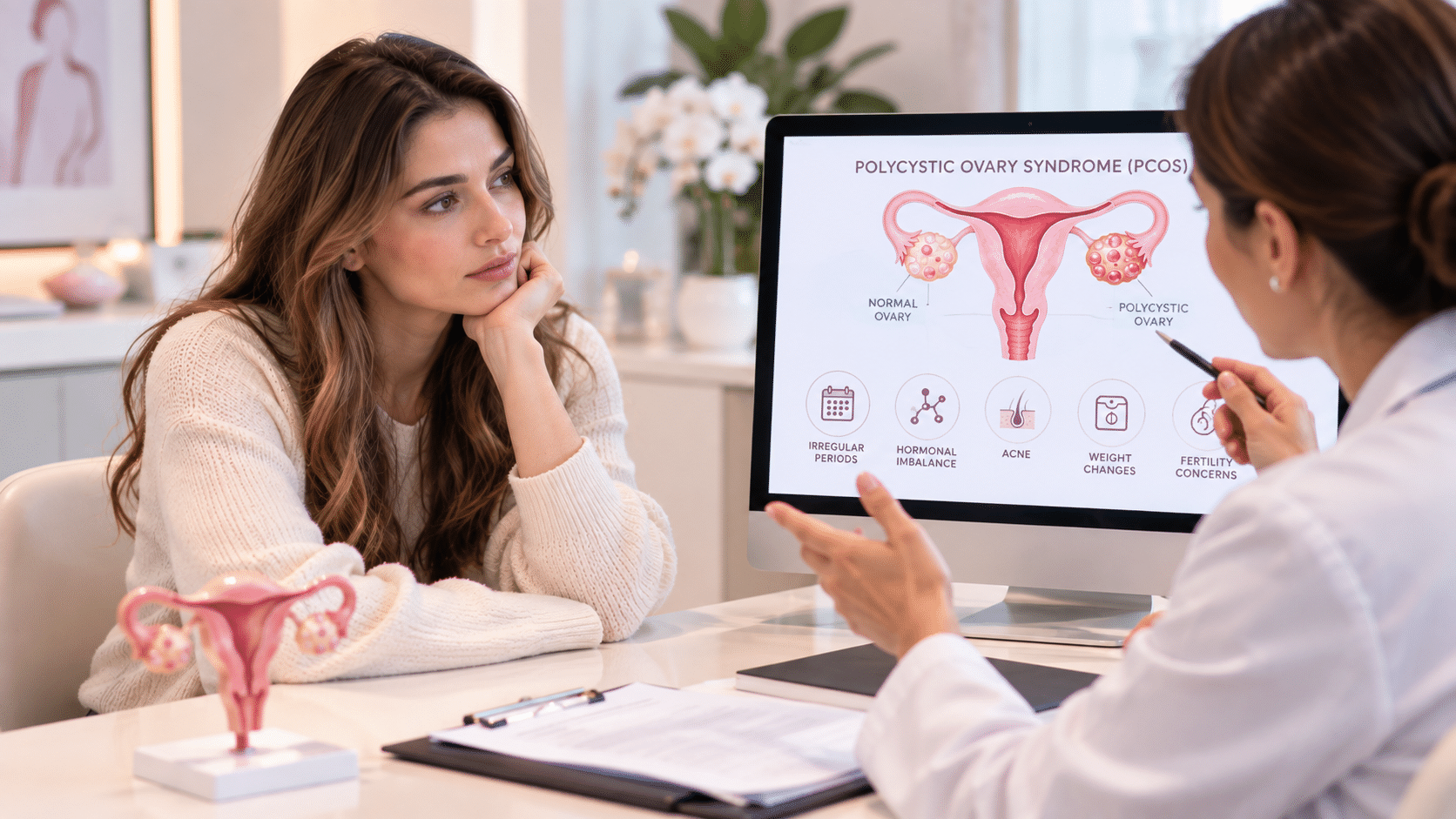
PCOS in Women: Symptoms, Causes, Diagnosis & Treatment
Irregular periods, acne, unwanted hair growth and difficulty managing weight can sometimes be connected by one underlying condition: Polycystic Ovary Syndrome. Understanding PCOS is the first step towards finding a management plan that works for you.
What Is Polycystic Ovary Syndrome?
Polycystic Ovary Syndrome, commonly known as PCOS, is a hormonal condition that can affect how the ovaries work and influence periods, skin, hair growth, fertility and other aspects of health.
PCOS does not affect every woman in the same way. Some women first seek advice because their periods are irregular, while others may be concerned about acne, excess hair growth or difficulties becoming pregnant.
If you are experiencing symptoms, specialist PCOS assessment and treatment can help establish whether PCOS may be contributing to them and what management options may be suitable.
PCOS is not simply a problem with your periods. It is a condition that can affect several areas of health, which is why management should be personalised to your symptoms, priorities and individual circumstances.
What Are the Common Symptoms of PCOS?
Symptoms vary considerably. You may experience only one or two symptoms, while another woman may experience several.
Irregular Periods
Periods may be infrequent, unpredictable or absent for extended periods because ovulation may not occur regularly.
Changes in Menstrual Flow
Some women experience heavier bleeding when a period does occur. Persistent troublesome bleeding may warrant a heavy periods assessment .
Excess Hair Growth
Increased androgen activity can sometimes cause excess facial or body hair.
Acne & Oily Skin
Hormonal changes associated with PCOS can contribute to persistent acne or increased skin oiliness.
Hair Thinning
Some women notice thinning of scalp hair or changes in their usual pattern of hair growth.
Weight Changes
PCOS may occur alongside metabolic changes that can make weight management more challenging for some women.
What Causes PCOS?
There is no single known cause of PCOS. Instead, several hormonal, metabolic and genetic factors may contribute.
Hormonal Imbalance
Women with PCOS may have higher levels or increased activity of androgens, sometimes referred to as male-type hormones. This can influence ovulation, skin and hair growth.
Insulin Resistance
Insulin resistance can be associated with PCOS in some women. The body may produce additional insulin, which can influence ovarian hormone production.
Family History
PCOS can occur more frequently within some families, suggesting that genetic factors may contribute to the condition.
How Is PCOS Diagnosed?
There is not one single test that diagnoses PCOS in every patient. Assessment typically considers your symptoms, menstrual history and other clinical findings while also considering alternative causes.
Depending on your individual circumstances, assessment may include:
- A detailed menstrual history
- Discussion of skin and hair changes
- Medical and family history
- Blood tests where appropriate
- Hormonal assessment
- Ultrasound where clinically indicated
Not everyone with PCOS has visibly “polycystic” ovaries on an ultrasound, and ultrasound findings alone do not necessarily mean that someone has PCOS. Diagnosis should consider the overall clinical picture.
How Can PCOS Be Treated?
There is no universal PCOS treatment because different women may have different symptoms and priorities. Management is therefore tailored to the individual.
Managing Periods
Treatment may be considered to help regulate menstrual cycles and protect the health of the womb lining where appropriate.
Lifestyle Support
Healthy eating, regular physical activity and sustainable weight management may improve some symptoms and metabolic health.
Hormonal Treatment
Hormonal options may be discussed depending on your symptoms, health history and treatment goals.
Symptom-Focused Care
Management can also target individual concerns such as acne, unwanted hair growth or irregular bleeding.
When Should You See a Gynaecologist About PCOS?
Consider arranging a specialist assessment if you are experiencing persistent symptoms or changes that are concerning you.
- Your periods are consistently irregular
- You frequently miss periods
- Your periods have become unusually heavy
- You have persistent acne
- You notice increased facial or body hair
- You are concerned about fertility
- You have unexplained menstrual changes
- Your symptoms are affecting your wellbeing
If irregular periods are accompanied by significant bleeding, you can also learn more about heavy periods treatment .
Explore Related Women's Health Services
PCOS symptoms can sometimes overlap with other menstrual and gynaecological concerns. Explore related specialist services:
Private PCOS Care with Mr Mohammad Masood
At Gynaeaesthetics London, your care is led by Mr Mohammad Masood, Consultant Obstetrician & Gynaecologist.
With extensive experience across NHS and private practice, Mr Masood provides personalised assessment and care for women experiencing PCOS, menstrual concerns and a broad range of general and cosmetic gynaecological conditions.
The aim is to understand your individual symptoms, explain your options clearly and develop an appropriate management plan around your health needs and priorities.
GMC Registration Number: 5201164
Frequently Asked Questions About PCOS
Does PCOS always cause irregular periods?
Irregular or infrequent periods are common with PCOS, but symptoms vary and not every woman experiences the condition in exactly the same way.
Can you have PCOS without ovarian cysts?
Yes. The diagnosis of PCOS is based on a combination of clinical features and appropriate investigations. An ultrasound appearance alone does not determine whether someone has PCOS.
Can PCOS cause heavy periods?
PCOS can cause irregular ovulation and menstrual changes. Some women may experience infrequent periods followed by heavier bleeding.
Can PCOS affect fertility?
PCOS may affect fertility in some women because irregular ovulation can make conception more difficult. However, the impact varies between individuals and appropriate assessment can help determine suitable next steps.
Can PCOS be cured?
PCOS is generally managed rather than treated with a single permanent cure. The aim is to address symptoms and longer-term health considerations according to the individual's needs.
Concerned About PCOS Symptoms?
If irregular periods or other possible PCOS symptoms are affecting you, arrange a confidential consultation to discuss your concerns, assessment and appropriate management options.
Explore PCOS Care Call +44 78 2597 0530