

Endometriosis: Symptoms, Diagnosis & When to See a Gynaecologist
Women’s Health • Endometriosis • Gynaecology
What Is Endometriosis?
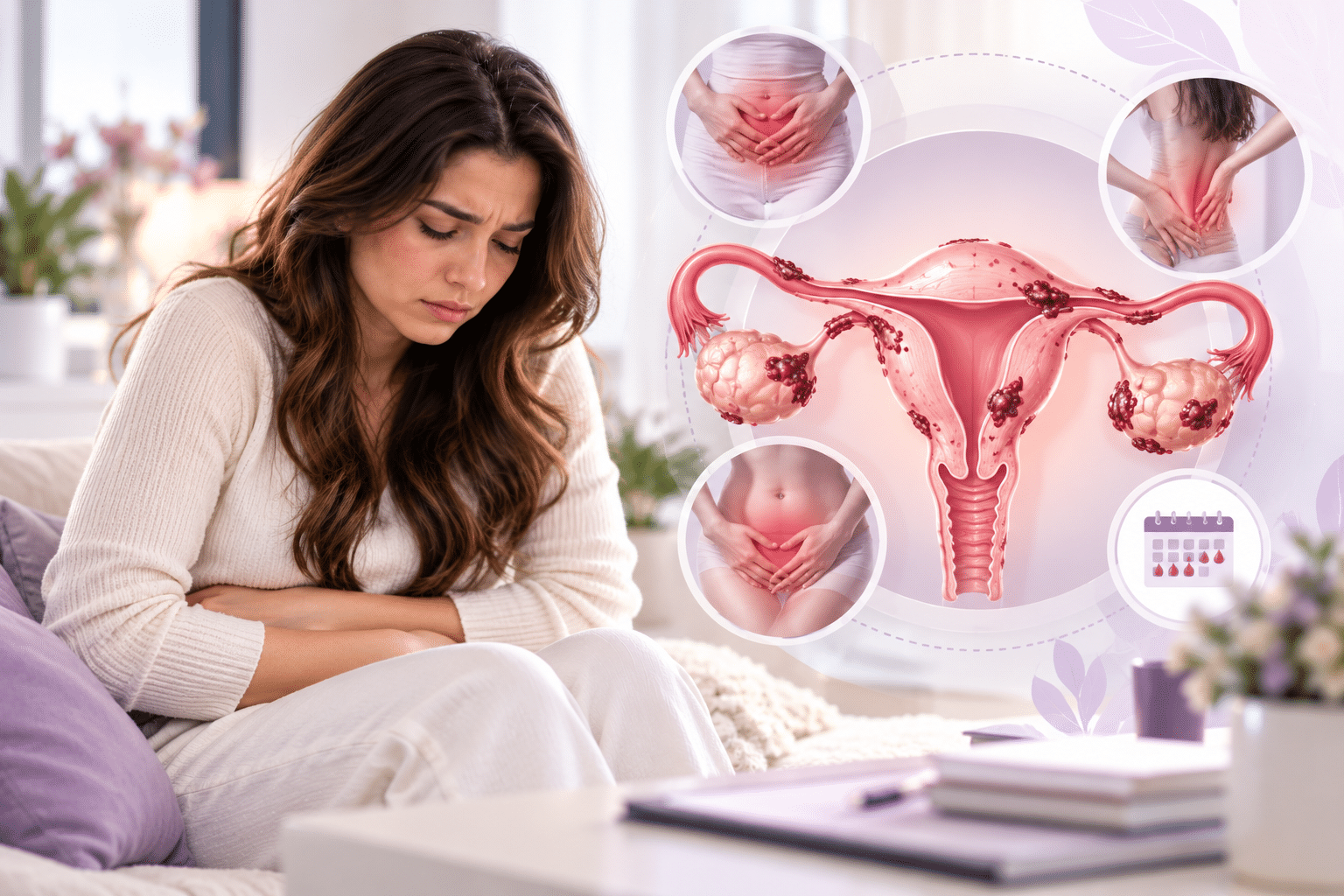
Endometriosis is a condition in which tissue similar to the lining of the uterus grows outside the uterus. It may affect areas within the pelvis, including around the ovaries and fallopian tubes.
The symptoms can vary considerably from one person to another. Some women experience significant pain, while others may have relatively mild symptoms.
If you are concerned about persistent symptoms, a specialist endometriosis assessment can help determine the most appropriate next steps.
Common Symptoms of Endometriosis
Endometriosis does not present in exactly the same way for every woman. However, symptoms may include:
- Severe or worsening period pain
- Persistent or recurring pelvic pain
- Pain during or after sexual intercourse
- Heavy or prolonged periods
- Pain during bowel movements or urination, particularly around your period
- Bloating or abdominal discomfort
- Fatigue
- Difficulty becoming pregnant
Pelvic pain can have several possible causes and is not always due to endometriosis. Read more about the assessment of pelvic pain and other possible gynaecological causes.
Is Severe Period Pain Normal?
Period discomfort is common, but pain that repeatedly prevents you from working, studying, sleeping or carrying out normal daily activities deserves medical attention.
You should also consider seeking advice if your periods have become progressively more painful or if pain is accompanied by unusually heavy bleeding.
If bleeding itself is a major concern, our guide to heavy periods and their treatment explains when further assessment may be appropriate.
When Should You Speak to a Gynaecologist?
Consider arranging an assessment if you experience:
- Period pain that interferes with everyday life
- Persistent pelvic pain
- Pain during intercourse
- Heavy or irregular menstrual bleeding
- Symptoms that are becoming progressively worse
- Concerns about fertility alongside pelvic or menstrual symptoms
How Is Endometriosis Diagnosed?
Diagnosis usually begins with a detailed discussion of your symptoms, menstrual history and general health. Your gynaecologist may ask when the pain occurs, whether it changes throughout your menstrual cycle and how much it affects your daily activities.
Depending on your individual circumstances, further assessment may include a pelvic examination and imaging such as an ultrasound. Sometimes additional investigation is required before a diagnosis can be confirmed.
Because conditions such as ovarian cysts can also cause pelvic pain or pressure, careful assessment is important rather than assuming that every symptom is caused by endometriosis.
What Treatment Options Are Available?
Treatment is individualised. The right approach depends on factors such as your symptoms, their severity, your medical history and whether fertility is currently important to you.
Management may involve:
- Pain-relief strategies
- Hormonal treatment
- Monitoring symptoms over time
- Surgical treatment in selected cases
There is no single treatment plan that is suitable for everyone. Discussing the advantages and limitations of each option with a gynaecologist can help you decide what is appropriate for your circumstances.
Endometriosis and Fertility
Endometriosis can be associated with fertility difficulties in some women, although having endometriosis does not automatically mean that you will be unable to become pregnant.
If you have been trying to conceive and are also experiencing symptoms such as painful periods or chronic pelvic pain, discussing both issues during your gynaecology consultation may be helpful.
Could My Symptoms Be Caused by Something Else?
Yes. Pelvic pain, painful periods and abnormal bleeding can occur for many reasons. Fibroids, ovarian cysts and other gynaecological conditions can sometimes produce overlapping symptoms.
For example, you can learn more about fibroids, ovarian cyst management and our wider general gynaecology services.
Keeping Track of Your Symptoms
Before your appointment, it can be useful to keep a record of your menstrual cycle and symptoms. Note when pain begins, how severe it is, how long it lasts and whether you experience changes in bleeding, bowel or bladder symptoms.
This information can give your gynaecologist a clearer picture of how your symptoms change throughout your cycle.
Don't Ignore Persistent Pelvic or Period Pain
You do not need to simply accept severe menstrual or pelvic pain as a normal part of life. If symptoms are recurring, worsening or affecting your daily activities, obtaining a professional assessment can help identify possible causes and appropriate treatment options.
At Gynaeaesthetics London, patients can access specialist gynaecological assessment for a range of menstrual and pelvic health concerns.
Concerned About Endometriosis Symptoms?
If persistent period pain, pelvic pain or other symptoms are affecting your quality of life, arrange a consultation to discuss your concerns and available assessment options.
Book a Gynaecology Consultation