


HRT in 2026: What the Evidence Says and How a Private Gynaecologist Can Help
Mr Mohammad Masood
Consultant Obstetrician & Gynaecologist, MBBS FCPS MRCOG FRCS Ed
Clinical Lead for Gynaecological Services, Barking, Havering and Redbridge University Hospitals NHS Trust (BHRUT)
Hormone replacement therapy has been one of the most misunderstood treatments in women’s health. This article explains what the evidence actually shows in 2026 and how modern HRT can improve quality of life for women going through menopause.
What Is Menopause, and Why Does It Matter?
Menopause means twelve months without a period, caused by the ovaries naturally producing less oestrogen and progesterone. In the UK, the average age is 51. Perimenopause, when symptoms first begin, often starts a few years earlier, and recognising it early makes treatment far more effective.
Oestrogen affects the brain, bones, heart, skin, and joints, which is why symptoms can show up across the whole body. The reassuring part is that many of these symptoms can respond well to the right treatment.
Short-Term Symptoms
- Hot flushes and night sweats
- Sleep problems
- Mood changes, anxiety, or brain fog
- Lower libido, headaches, and joint aches
Medium-Term Symptoms
- Vaginal dryness and discomfort
- Recurrent urinary infections
- Needing to urinate more often
Long-Term Effects
- Bone density naturally declines after menopause
- Heart health becomes increasingly important
- Lower oestrogen may be linked to memory changes later in life
What Does the Evidence Say About HRT in 2026?
Breast Cancer: An Honest, Reassuring Answer
Modern HRT is far safer than many women have been led to believe, and understanding the real numbers helps put this in perspective.
Oestrogen-only HRT, used by women who’ve had a hysterectomy, doesn’t raise breast cancer risk for the first 10 to 15 years, and some studies even suggest a small protective effect.
Combined HRT using body-identical progesterone, now widely used in UK practice, carries a lower risk profile than older combinations.
Heart Health
Starting HRT within 10 years of menopause, or before age 60, may offer important cardiovascular benefits for suitable patients. Patches, gels, and sprays are also commonly preferred because they avoid the increased clot risk associated with some oral formulations.
Bone Protection
Oestrogen is one of the most effective treatments for protecting bone density after menopause and remains an important part of menopause care where clinically appropriate.
Types of HRT
How HRT Is Taken
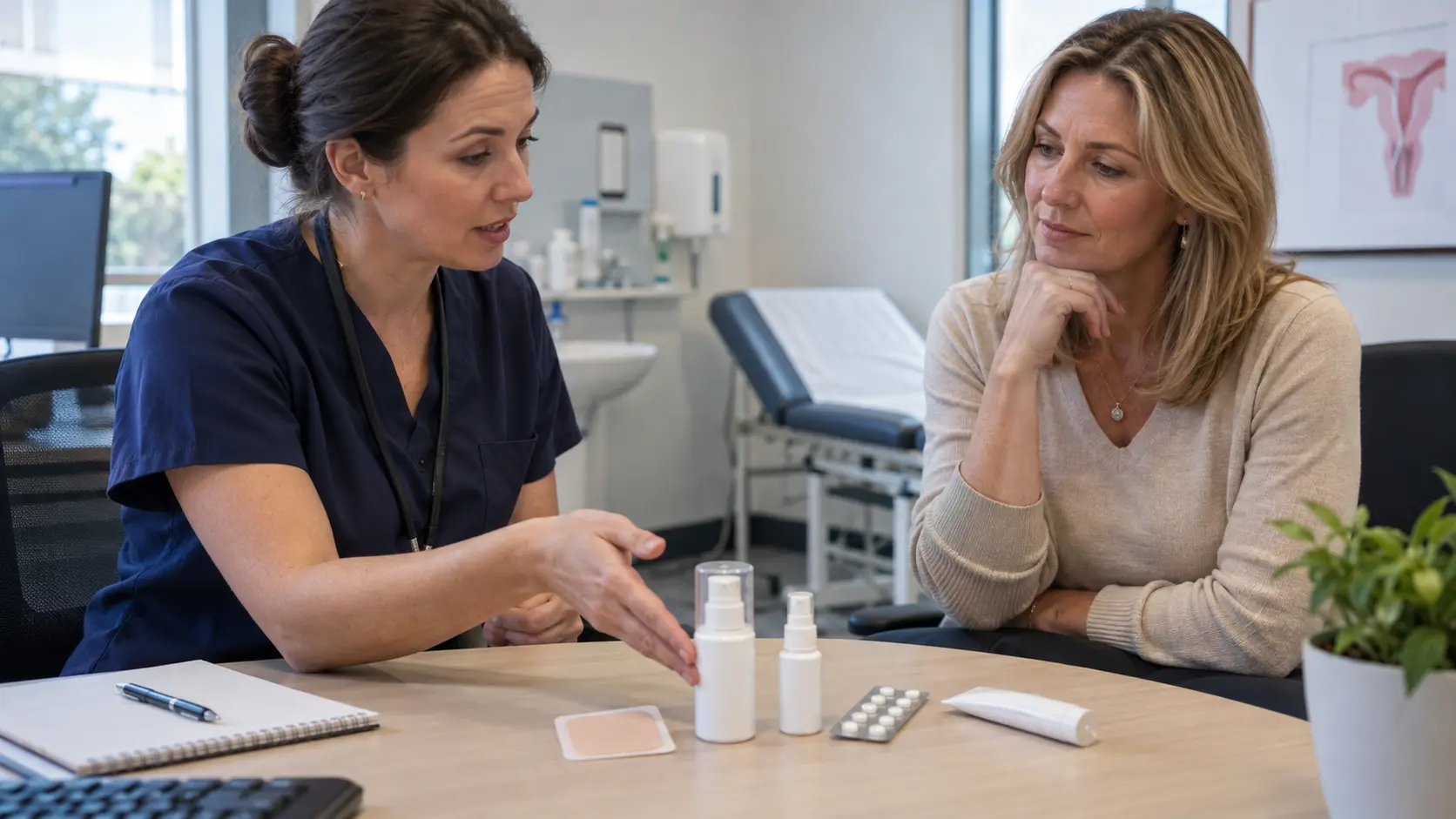
Patches, gels, and sprays are usually the first choice, since they provide steady hormone levels and are suitable for many women. Tablets are convenient too, while vaginal creams are used for local symptoms such as dryness and discomfort.
The Progesterone Part
Body-identical progesterone such as Utrogestan is commonly used in modern UK menopause care. The Mirena coil can also be used to protect the womb lining and may provide contraception.
Testosterone
Testosterone may be considered for some women experiencing persistent symptoms such as low libido after appropriate specialist assessment.
What Happens at a Private HRT Consultation?
A private consultation allows time to review your symptoms, medical history and family background, discuss treatment options, arrange appropriate investigations, and build an individual menopause care plan.
Frequently Asked Questions
How long can I stay on HRT?
There is no universal fixed limit. Treatment should be reviewed regularly with your clinician based on your symptoms, health history and individual benefits and risks.
Can I take HRT if I've had a blood clot before?
This depends on your individual history and requires specialist assessment to determine the most appropriate treatment options.
I've been told I'm too young for menopause. What should I do?
Symptoms can occur earlier than expected, and a clinical assessment can help determine whether further investigation or treatment is appropriate.
Is the Mirena coil a type of HRT?
The Mirena coil can provide the progestogen component of an HRT plan for some women while also protecting the womb lining.
Ready to Discuss Your Menopause Symptoms?
Book a private consultation to discuss your symptoms, medical history and treatment options with a specialist.