

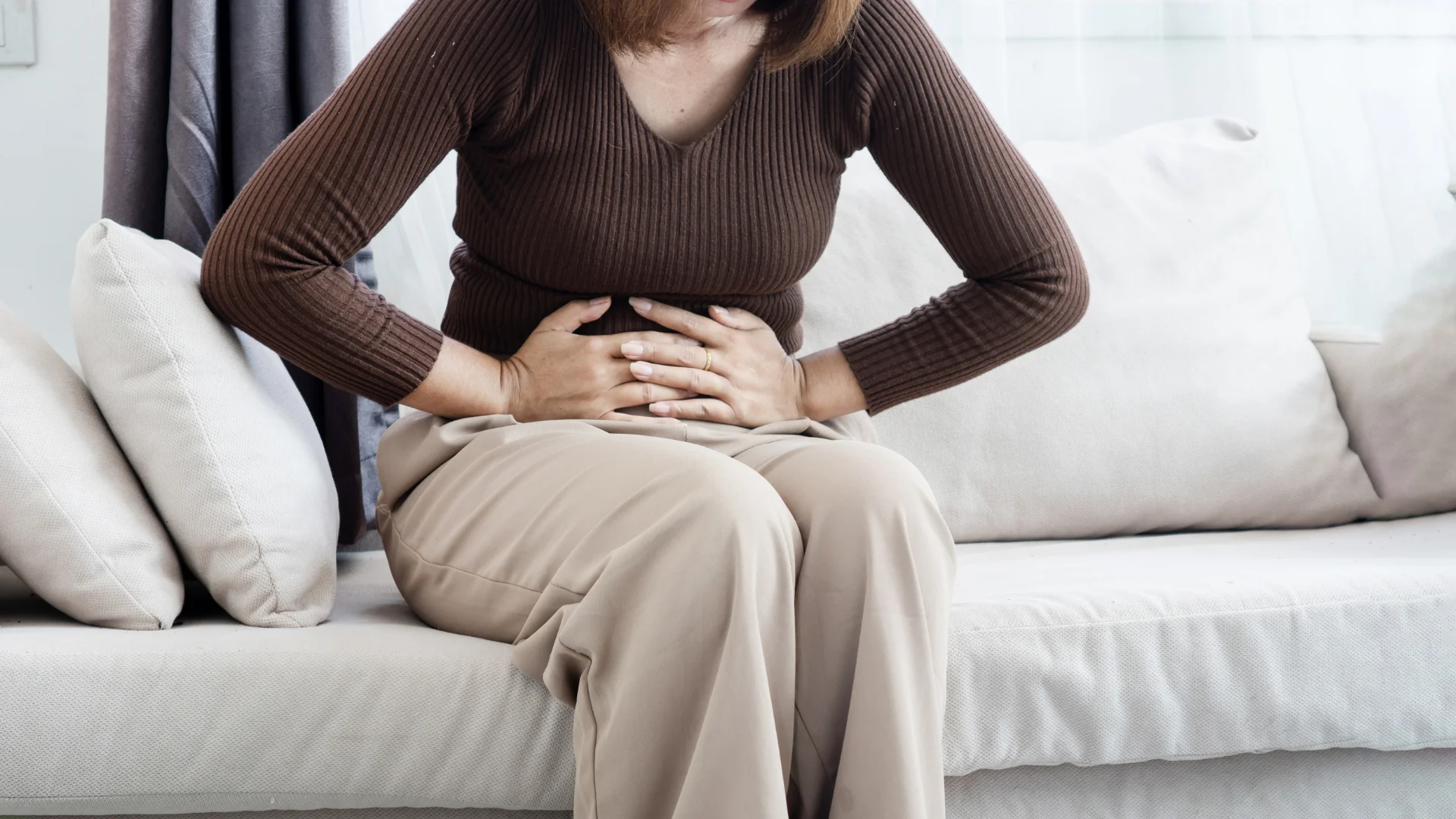
Fast Private Treatment for Heavy, Painful & Prolonged Periods
What Are Heavy Periods?
Heavy bleeding is not always limited to your period. If you notice bleeding between periods, or bleeding after sex, that is a different pattern and it should be checked promptly — read our guide to bleeding between periods to learn the warning signs. Cramping or pelvic pain alongside heavy bleeding is also common, and it can be a clue to the underlying cause.
You may have heavy periods if you:
- Soak through a pad or tampon every hour or two for several consecutive hours
- Need to use both a pad and a tampon simultaneously
- Pass large blood clots (bigger than a 50p coin)
- Bleed for longer than 7 days
- Feel exhausted, dizzy, or breathless during your period
- Experience significant cramping or pelvic pain alongside heavy bleeding
- Feel anxious about leaving the house or going to work during your period
What Causes Heavy Periods?
Fibroids
Non-cancerous growths in or around the uterus that are one of the most common causes of heavy, prolonged, and painful periods.
Endometriosis
A condition where tissue similar to the womb lining grows outside the uterus, causing heavy periods, severe pain, and in some cases fertility difficulties.
Adenomyosis
A condition where the lining of the womb grows into the muscular wall of the uterus, causing heavy, painful, and prolonged periods.
Polycystic Ovary Syndrome (PCOS)
Hormonal imbalances associated with PCOS can cause irregular and sometimes very heavy periods.
Hormonal Imbalances
An imbalance of oestrogen and progesterone can cause the uterine lining to become too thick, resulting in heavier than normal bleeding.
Thyroid Disorders
An underactive thyroid can affect the menstrual cycle and contribute to heavier periods in some women.
Pelvic Inflammatory Disease (PID)
An infection of the reproductive organs that can cause heavy and irregular bleeding alongside pelvic pain.
Dysfunctional Uterine Bleeding
In some cases, heavy periods occur without an identifiable underlying cause. This is still very treatable with the right medical management.
You can read more about the conditions that can cause heavy periods on our fibroids, endometriosis, PCOS and pelvic pain pages. Finding the cause matters, because the most effective treatment for heavy periods is the one that treats what is causing them.
When to Seek Help for Heavy Periods
Many women put up with heavy periods for years before asking for help, often because they assume heavy bleeding is normal for them. It is always worth speaking to a gynaecologist if your periods are affecting your daily life. Book an appointment promptly if you soak through a pad or tampon every hour for several hours in a row, pass blood clots larger than a 50p coin, bleed for more than seven days, or feel faint, dizzy or breathless during your period.You should also seek help if your periods have suddenly become much heavier than they used to be, if you bleed between periods or after sex, or if you notice any bleeding after the menopause. Heavy periods that leave you tired, low in energy or anaemic are not something to simply live with. If you are unsure whether your bleeding is normal, our complete guide to heavy periods explains the warning signs in more detail, and a consultation with Mr Masood can give you a clear answer.
How Are Heavy Periods Diagnosed?
At Gyneaesthetics London, your consultation with Mr Mohammad Masood will include a thorough review of your symptoms and medical history. Where appropriate, investigations may include:
- Blood tests to check for anaemia, thyroid function, and hormone levels
- Pelvic ultrasound to assess the uterus and ovaries for fibroids, polyps, or other abnormalities
- Internal examination where appropriate and comfortable for you
- Hysteroscopy (a camera examination of the inside of the womb) if further assessment is needed
Many of these investigations can be arranged quickly and privately, so you receive clear answers without unnecessary delays.
It can help to bring a short note of your recent periods to your consultation — when they started, how long they lasted, how often you needed to change pads or tampons, and whether you passed clots. This helps Mr Masood build a clear picture of your bleeding pattern and choose the most appropriate investigations. If you have already tried a treatment, such as the contraceptive pill or tranexamic acid, let him know how well it worked. You can also read our frequently asked questions before your visit, or book an appointment online at a clinic that suits you.
Treatment Options
The right treatment for heavy periods depends on the underlying cause, your symptoms, your age, and whether you are planning a future pregnancy. Mr Masood will walk you through all available options and together you will agree on the best plan for you.
Hormonal Treatments
Hormonal options including the combined contraceptive pill, progesterone-only tablets, or hormonal patches can help regulate the menstrual cycle and significantly reduce heavy bleeding.
The Mirena Coil
The hormonal intrauterine system, commonly known as the Mirena coil, is one of the most effective treatments for heavy periods. This small device is fitted into the womb and releases a low dose of progesterone, significantly reducing or in many cases stopping periods altogether. Mr Masood offers private coil fitting across all clinic locations.
Tranexamic Acid & Anti-Inflammatory Medication
Non-hormonal medications such as tranexamic acid can help reduce blood loss during a period, while anti-inflammatory tablets such as mefenamic acid can help manage both bleeding and pain.
Endometrial Ablation
A minimally invasive procedure that removes or destroys the lining of the womb, significantly reducing or stopping periods altogether. It is a highly effective option for women who have completed their family.
Surgical Treatment
Where fibroids, polyps, or other structural causes are identified, surgical removal may be the most appropriate option. Mr Masood is an experienced laparoscopic surgeon and performs minimally invasive procedures with faster recovery times and minimal scarring.
Laparoscopic Hysterectomy
For women with severe symptoms who have completed their family and have not responded to other treatments, a laparoscopic hysterectomy may be considered as a permanent and definitive solution.
Heavy Periods and Fertility
Heavy periods do not always affect fertility, but some of the conditions that cause them can. Fibroids can distort the shape of the womb, and endometriosis can affect the ovaries and fallopian tubes, so both conditions are worth investigating if you are trying to conceive.
Hormonal treatments and the Mirena coil are not suitable while you are trying for a baby, so your plan will be shaped around your fertility goals. For many women, treating the underlying cause restores a normal bleeding pattern and improves the chances of conceiving naturally. If you are planning a pregnancy, tell Mr Masood at your consultation so that investigations and treatment protect your fertility. Surgical options, including laparoscopic hysterectomy, are only considered when your family is complete and other treatments have not helped.
A first consultation costs £200 and a follow-up consultation costs £160. You can see the full price list on our Pricing page, and book an appointment online at one of our clinics in Brentwood, East London, Ilford & Woodford, or Romford & Hornchurch.
The Impact of Heavy Periods on Daily Life
It is easy for others to underestimate just how much heavy periods can affect your quality of life. Many women experience:
- Iron deficiency anaemia causing persistent fatigue, brain fog, and breathlessness
- Anxiety and embarrassment about leaking or being away from home during their period
- Disrupted sleep due to overnight bleeding
- Difficulty exercising or maintaining an active lifestyle
- Reduced productivity at work or in daily life
- Emotional distress and a reduced sense of wellbeing
These are not trivial concerns. Heavy periods are a medical condition that deserves proper attention, and effective treatment is available.
If heavy periods are linked to an underlying condition, treating that condition often improves the bleeding as well as the wider impact on your life. Read more about fibroids and endometriosis, two common causes of heavy periods, and our complete guide to heavy periods for more on symptoms, causes and what to expect from treatment. You do not have to organise your life around your periods — effective treatment can give you back your confidence, your sleep and your energy.
Why Choose Gyneaesthetics London?
- Consultant-led care by Mr Mohammad Masood
- No GP referral needed
- Same-week appointments available
- Clinics in Hornchurch, Brentwood, and Ilford
- Full range of medical and surgical treatment options
- Private coil fitting available
- Fully confidential from start to finish
- Consultations from £200
Frequently Asked Questions
No. You can book directly with us without a GP referral. Simply call, WhatsApp, or use our online booking form and we will arrange your appointment promptly.
In most cases, heavy periods are caused by benign conditions such as fibroids or hormonal imbalances. However, it is always worth getting a proper assessment to rule out any underlying conditions and get the right treatment in place.
Not necessarily. Many women with heavy periods respond very well to hormonal treatments or the Mirena coil without ever needing surgery. Mr Masood will always recommend the least invasive effective option first and discuss all alternatives with you in full.
This depends on the treatment chosen. Some women notice a significant improvement within the first one to two menstrual cycles following treatment. Mr Masood will give you a clear idea of what to expect during your consultation.
Yes. Gyneaesthetics London runs a private heavy period clinic led by Mr Mohammad Masood (GMC 5201164). A first consultation costs £200 and a follow-up costs £160. Clinics are held at The Cadogan Clinic London, Spire Hartswood and The Nuffield Brentwood. No GP referral is needed, and same-week appointments are available. You can book an appointment online.
Our Services
Book Your Consultation Today
Medically reviewed by Mr Mohammad Masood. Last reviewed: 13 November 2026.