

HRT in 2026: What the Evidence Says and How a Private Gynaecologist
Mr Mohammad Masood | Consultant Obstetrician & Gynaecologist, MBBS FCPS MRCOG FRCS Ed | Clinical Lead for Gynaecological Services, Barking, Havering and Redbridge University Hospitals NHS Trust (BHRUT) | GMC No. 5201164
Hormone replacement therapy has been one of the most misunderstood treatments in women’s health, and the good news is that the science has moved on a great deal. This article explains what the evidence actually shows in 2026, based on my own clinical practice at Gynaeaesthetics London, and how modern HRT can genuinely improve quality of life for most women going through menopause.
What Is Menopause, and Why Does It Matter?
Menopause means twelve months without a period, caused by the ovaries naturally producing less oestrogen and progesterone. In the UK, the average age is 51. Perimenopause, when symptoms first begin, often starts a few years earlier, and recognising it early makes treatment far more effective.
Oestrogen affects the brain, bones, heart, skin, and joints, which is why symptoms can show up across the whole body. The reassuring part is that nearly every one of these symptoms responds well to the right treatment.
Short-Term Symptoms
- Hot flushes and night sweats, affecting around 75% of women
- Sleep problems
- Mood changes, anxiety, or brain fog
- Lower libido, headaches, and joint aches
Medium-Term Symptoms
- Vaginal dryness and discomfort during sex, known as genitourinary syndrome of menopause
- Recurrent urinary infections
- Needing to urinate more often
Long-Term Effects
- Bone density naturally declines after menopause, though this is very manageable with the right treatment
- Heart disease risk rises after menopause, and HRT started early can genuinely help protect against this
- Lower oestrogen is linked to memory changes later in life, another area where early treatment makes a real difference
What Does the Evidence Say About HRT in 2026?
Breast Cancer: An Honest, Reassuring Answer
Modern HRT is far safer than many women have been led to believe, and understanding the real numbers helps put this in perspective.
Oestrogen-only HRT, used by women who’ve had a hysterectomy, doesn’t raise breast cancer risk for the first 10 to 15 years, and some studies even suggest a small protective effect.
Combined HRT using body-identical progesterone, now the first choice in UK practice, carries a much lower risk than older combinations. Current UK data show no increased breast cancer risk at five years with this type, and I always go through the latest figures with patients at consultation, since the evidence keeps improving in women’s favour.
Older combined HRT using synthetic progestogen carries a small increase in risk with long-term use, roughly similar in scale to drinking one to two glasses of wine a night, which helps put the actual size of this risk into everyday context.
Heart Health
Starting HRT within 10 years of menopause, or before age 60, is genuinely protective for the heart, not harmful. Patches, gels, and sprays don’t raise the risk of blood clots, unlike oral tablets, so most women have a safe, effective route available to them
Bone Protection
Oestrogen is the single most effective treatment for protecting bone density after menopause, and this is one of the clearest, most well-established benefits of HRT
Types of HRT
How HRT Is Taken
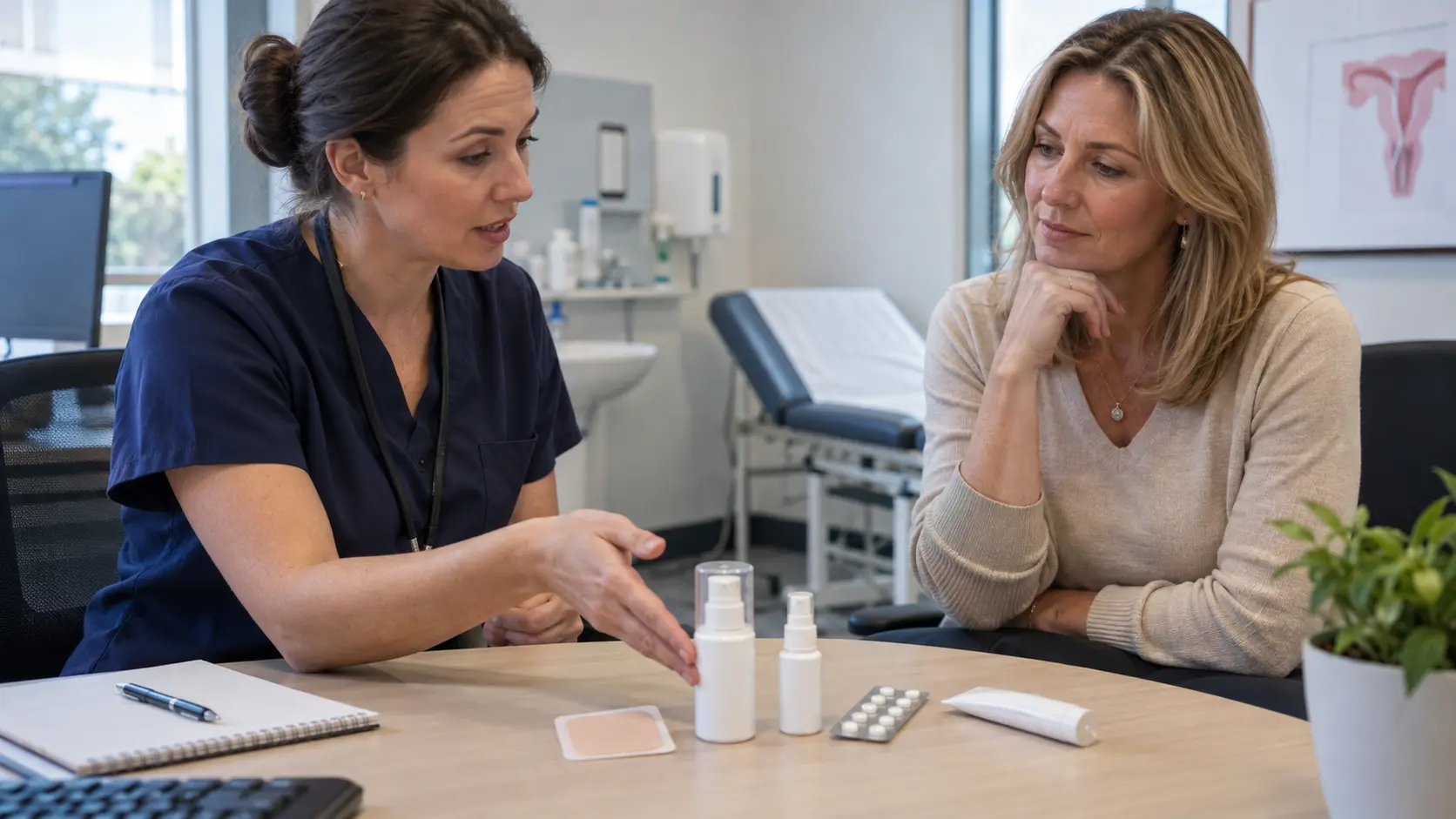
Patches, gels, and sprays are usually the first choice, since they carry no added clot risk and give steady, reliable hormone levels. Tablets are convenient too, and remain very safe for most healthy women under 60. Vaginal creams treat local symptoms like dryness with minimal absorption elsewhere in the body, making them a good option for women who can’t take full-body HRT.
The Progesterone Part
Body-identical progesterone (Utrogestan) is the preferred choice in the UK today, with a genuinely favourable safety profile. The Mirena coil is another excellent option, protecting the womb lining while also offering contraception.
Testosterone
Low testosterone in women is often missed, yet treating it can make a real difference to energy, mood, and libido. A licensed low-dose testosterone gel is recommended by NICE and is well tolerated by most women who need it.
What Happens at a Private HRT Consultation?
A private consultation gives you the time a standard GP visit rarely allows. At my clinics with Gynaeaesthetics London, I take a full history, review your personal and family background, arrange any tests you need, and explain your HRT plan clearly so you always know what to expect. Many women tell me the consultation itself, simply having time for every question, feels just as valuable as the treatment that follows.
Frequently Asked Questions
How long can I stay on HRT?
There’s no fixed limit. Many women stay on HRT well into their 60s and beyond, with your specialist reviewing things with you each year to make sure it’s still the right fit.
Can I take HRT if I've had a blood clot before?
Often, yes. Patches or gel don’t raise clot risk, so a past clot doesn’t automatically rule out HRT. A quick check with a blood specialist first helps confirm the safest option for you.
I've been told I'm too young for menopause. What should I do?
Early menopause before 40 affects around 1 in 100 women and responds very well to the right care. A specialist assessment helps protect your long-term health and can bring real relief.
Is the Mirena coil a type of HRT?
Yes, it provides the progesterone part. Adding oestrogen separately, through a patch, gel, or spray, gives you a complete, well-tolerated HRT plan.
Book a Private HRT Consultation
If menopause symptoms are affecting your daily life, a private consultation gives you the time and expertise to feel like yourself again. No GP referral is needed, and appointments are often available the same week.
I see patients at Nuffield Health Brentwood, Spire Hartswood, Westland Medical Centre in Romford, and Cadogan Clinic London, alongside Gynaeaesthetics London clinics across Essex and East London.
Contact: gyneaestheticslondon.com | 0782 597 0530