

Cervical Ectropion: Causes, Symptoms and When Treatment Is Needed
Learn what cervical ectropion is, why it may cause discharge or bleeding after sex, how it is diagnosed and when treatment may be recommended.
Noticing light bleeding after sexual intercourse, unexpected spotting or increased vaginal discharge can be concerning.
One relatively common and usually harmless condition that may cause these symptoms is cervical ectropion.
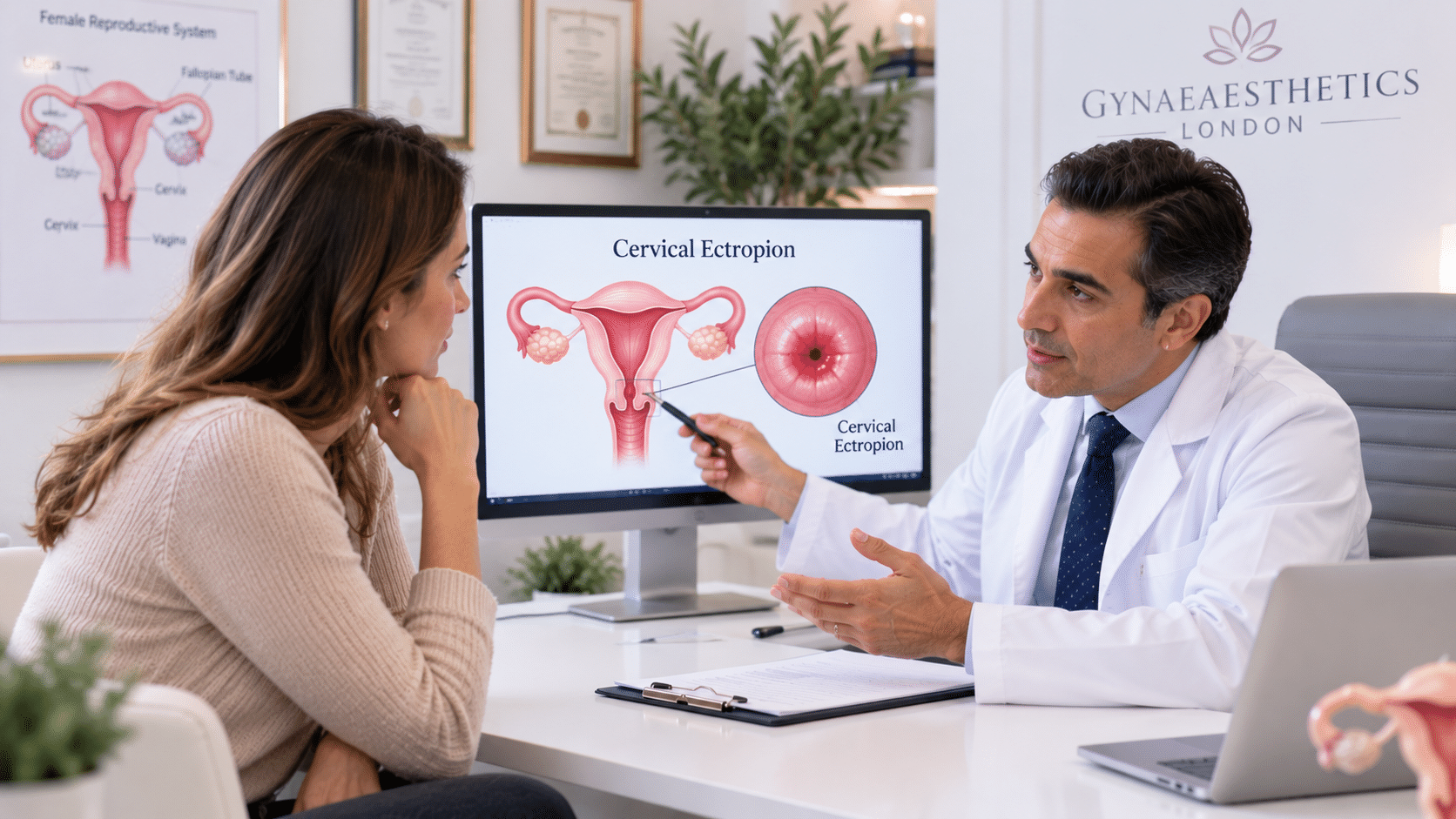
Cervical ectropion occurs when glandular cells that normally line the cervical canal are visible on the outer surface of the cervix.
It is not cervical cancer and does not itself increase the risk of developing cervical cancer. However, bleeding after sex should always be assessed to exclude other causes.
At Gynaeaesthetics London, women can explore private gynaecological care for cervical health concerns.
1. What Is Cervical Ectropion?
The cervix is the lower part of the uterus that connects to the vagina.
Two main types of cells cover different areas of the cervix:
- Squamous cells: Cover the outer surface of the cervix.
- Glandular cells: Line the cervical canal and produce mucus.
Cervical ectropion occurs when glandular cells are present on the outer surface of the cervix.
These cells are more delicate than surrounding squamous cells and may bleed more easily when touched.
The condition was previously called cervical erosion, although this term is misleading because the cervix is not actually eroded or damaged.
2. What Causes Cervical Ectropion?
Cervical ectropion is commonly associated with hormonal changes, particularly higher oestrogen levels.
Younger Women
It is common during reproductive years when oestrogen levels are naturally higher.
Pregnancy
Hormonal changes during pregnancy may make cervical ectropion more noticeable.
Combined Hormonal Contraception
Some women using the combined contraceptive pill may develop cervical ectropion because of hormonal effects.
Natural Hormonal Changes
Changes in oestrogen levels throughout reproductive life can influence the appearance of cervical tissue.
Cervical ectropion is not caused by poor hygiene and is not a sexually transmitted infection.
3. Common Symptoms of Cervical Ectropion
Many women experience no symptoms. The condition may be identified during a routine cervical examination.
Bleeding After Sexual Intercourse
Because glandular cells are delicate, friction during intercourse may occasionally cause light bleeding.
However, bleeding after sex can have other causes, including infection, cervical polyps and abnormal cervical cells.
Increased Vaginal Discharge
Glandular cells naturally produce mucus. Some women notice increased clear or white vaginal discharge.
Spotting Between Periods
Light spotting outside the usual menstrual cycle may occur. Persistent or unexplained bleeding should be assessed.
Discomfort During Examination
The cervix may occasionally bleed slightly after contact during a cervical examination or screening test.
4. Is Cervical Ectropion Dangerous?
Cervical ectropion is usually benign. It is not cervical cancer and does not itself increase cervical cancer risk.
Nevertheless, similar symptoms may occur with other cervical conditions.
A clinician may recommend investigations to exclude:
- Cervical infection
- Sexually transmitted infections
- Cervical polyps
- Cervical cell abnormalities
- Other causes of unexplained bleeding
5. Cervical Ectropion vs Cervical Cancer
Although both may be associated with bleeding after intercourse, they are very different conditions.
| Feature | Cervical Ectropion | Cervical Cancer |
|---|---|---|
| Nature | Usually a benign anatomical variation | Malignant disease |
| Symptoms | Often none; sometimes discharge or contact bleeding | May cause abnormal bleeding, discharge or other symptoms |
| HPV | Not caused by HPV | Most cases are associated with persistent high-risk HPV infection |
| Diagnosis | Clinical examination and appropriate tests | Specialist assessment and biopsy |
| Treatment | Often no treatment required | Specialist cancer treatment |
Cervical screening identifies HPV-related risk and cervical cell changes. It is not a diagnostic test for symptoms such as bleeding after sex.
Seek medical assessment for symptoms even if your latest cervical screening result was normal.
6. How Is Cervical Ectropion Diagnosed?
Medical History
Your clinician may ask about bleeding after sex, spotting, vaginal discharge, contraception, pregnancy and previous cervical screening results.
Speculum Examination
A speculum examination allows the clinician to view the cervix.
Cervical ectropion often appears as a red area around the opening of the cervical canal.
The examination should be explained and performed with your consent.
Infection Testing
Swabs or tests for sexually transmitted infections may be recommended depending on symptoms and circumstances.
Colposcopy
Colposcopy is a detailed examination of the cervix using a magnifying instrument.
It may be recommended when the cervix looks unusual, screening results require further investigation or symptoms remain unexplained.
Learn more about abnormal smear results and colposcopy.
7. Does Cervical Ectropion Need Treatment?
Not always. If cervical ectropion causes no symptoms, treatment is generally unnecessary.
For persistent discharge or contact bleeding, treatment may be considered after other causes have been excluded.
Monitoring and Reassurance
For mild symptoms, no intervention may be needed. Some cases become less noticeable as hormones change.
Reviewing Hormonal Contraception
If symptoms are associated with combined hormonal contraception, an alternative method may be discussed.
Do not stop contraception without considering pregnancy prevention and suitable alternatives.
Cauterisation or Ablative Treatment
For persistent symptoms, treatment to the cervical surface may be offered.
Options may include silver nitrate, cold coagulation or cryotherapy, depending on clinical circumstances.
These procedures aim to reduce symptoms by treating exposed glandular cells.
8. What Happens After Cervical Ectropion Treatment?
Recovery depends on the procedure used. Some women experience temporary watery discharge, light bleeding or mild cramping.
Your clinician will explain aftercare instructions and when to seek medical advice.
You may be advised to avoid intercourse, tampons or certain activities for a short period while the cervix heals.
Seek advice if you experience heavy bleeding, fever, worsening pelvic pain or offensive-smelling discharge after treatment.
9. Can Cervical Ectropion Affect Fertility or Pregnancy?
Cervical ectropion itself does not usually affect fertility.
It does not typically prevent pregnancy or interfere with normal reproductive function.
It is relatively common during pregnancy because of hormonal changes.
However, bleeding during pregnancy should be assessed by a maternity healthcare professional rather than assumed to be caused by ectropion.
10. When Should You See a Gynaecologist?
Arrange an appointment if you experience:
- Bleeding after sexual intercourse
- Persistent spotting between periods
- Unusual or increased vaginal discharge
- Unexpected prolonged bleeding after an examination
- Ongoing pelvic discomfort
- Symptoms that return after treatment
Seek urgent care for heavy bleeding, severe pelvic pain, fainting or bleeding accompanied by significant illness.
If pregnancy is possible and pain occurs with bleeding, prompt assessment is particularly important.
Explore general gynaecology services.
Why Choose Gynaeaesthetics London?
Cervical symptoms can be unsettling, especially when they involve unexpected bleeding.
An individualised consultation can help determine whether cervical ectropion is responsible or whether another condition requires investigation.
At Gynaeaesthetics London, Consultant Gynaecologist Mr Mohammad Masood provides personalised care for women's health concerns.
Visit Gynaeaesthetics London to learn more about available care.
Frequently Asked Questions
Is cervical ectropion the same as cervical erosion?
Yes. Cervical erosion is an older term, but ectropion is preferred because the cervix is not actually eroded.
Can cervical ectropion cause bleeding after sex?
Yes. Delicate glandular cells may bleed after contact. However, bleeding after sex should be assessed to exclude other causes.
Is cervical ectropion a sexually transmitted infection?
No. It is not an STI and cannot be passed to a partner.
Does cervical ectropion increase cervical cancer risk?
No. Cervical ectropion itself does not increase cervical cancer risk.
Can cervical ectropion disappear naturally?
Yes. Its appearance may change over time as hormone levels or contraceptive use change.
Is treatment painful?
Some treatments may cause mild discomfort or cramping. Your clinician should explain what to expect and discuss pain-relief options.
Can cervical ectropion come back after treatment?
Yes. Symptoms may recur, particularly if hormonal factors remain. Further assessment may be needed.
Should I still attend cervical screening?
Yes. Cervical ectropion does not replace the need for routine cervical screening according to NHS guidance.
Book a Private Gynaecology Consultation in London
Experiencing bleeding after intercourse, unexpected spotting or persistent discharge?
Seek personalised assessment from Consultant Gynaecologist Mr Mohammad Masood.
Enquire About an AppointmentMedical disclaimer: This article provides general educational information and does not replace individual medical advice, diagnosis or treatment.